 NuNeSu
Begin with a place to rest
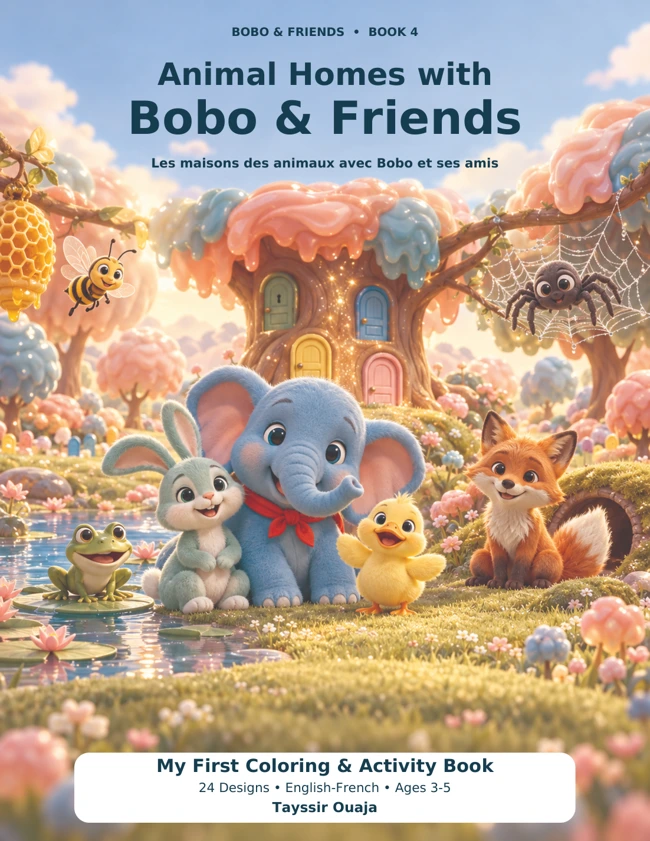
Open Animal Homes with Bobo & Friends, Book 4 in the English–French collection for ages 3–5. Its 24-design coloring format gives you a place to begin; the cover’s nest and web are useful details to notice together before choosing a page.
Try “What can you see?” before asking where an animal lives. Your child might notice a color, a line or Bobo first. Follow that observation. Then ask whether they would like to imagine a place for a familiar animal to rest. A verbal answer, a gesture or a drawing can all shape the activity.
Draw a home beside the page
On spare paper, draw a large, simple shape and invite your child to decide what it could become. They might add an entrance, leaves overhead or a wonderfully unlikely roof. Ask one practical question such as “Where would your animal go inside?” and let them supply the details.
Keep the extra drawing separate from the book so there is no need to find a particular exercise in its pages. If they prefer to color quietly, put the drawing aside. You can talk about the finished picture later, or simply enjoy it together.
Look at nature’s builders
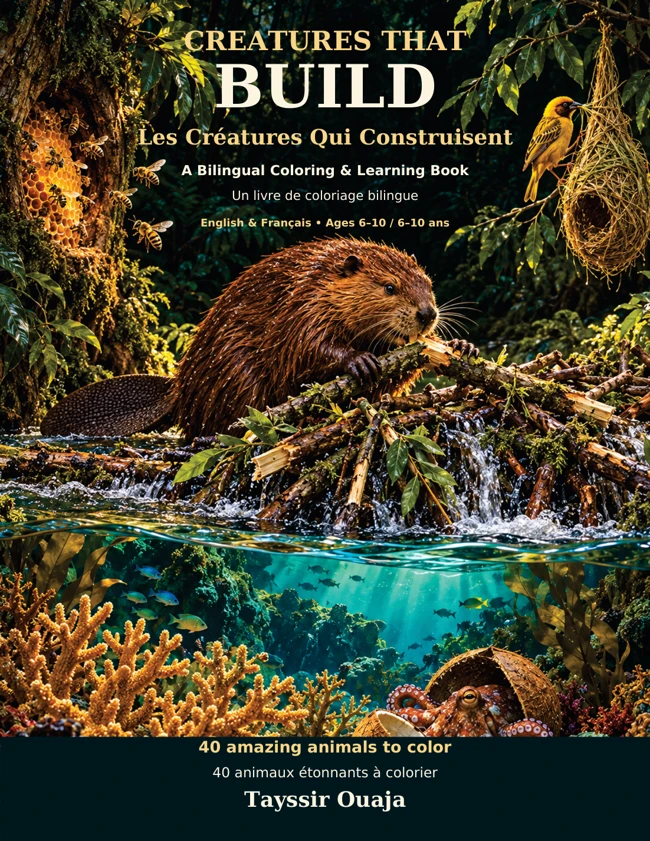
Creatures That Build, for ages 6–10, offers a related starting point with 40 featured creatures. The paperback inventory includes the North American beaver, baya weaver, garden orb-weaver and coconut octopus. Browse the title’s English–French creature list together and choose a name that raises a question.
Invite your child to look at the chosen illustration and describe shapes or materials they can actually see. On spare paper, sketch a possible structure using only lines and simple shapes. Ask what they would need to check in a nature reference before calling the drawing a realistic animal home.
Make room for facts and imagination
A storybook animal can have a purple front door because your child wants one. When the conversation changes to “Does this animal really live there?”, make that a separate question. You can say, “That is our invented version. Let’s look up what happens in nature.”
Choose an age-appropriate nature reference for the particular creature rather than assuming every structure is a home or that all animals of a kind live in the same setting. You do not need to resolve every question during coloring. Keep one question to revisit together.
Notice gently outdoors
If you spot a nest or web during an ordinary walk, observe from a distance. Leave wildlife and its surroundings undisturbed; you can remember a shape or color to draw when you get home. Avoid reaching into holes or moving a structure to see what is inside.
Back at the table, offer a choice: add the remembered detail to the spare-paper drawing, return to the coloring page, or stop there. For siblings using different books, invite each to show one shape they noticed. There is no need for their pictures or explanations to match.
More ideas for shared coloring
Compare NuNeSu coloring and activity books, or return to the watch-and-color guide.